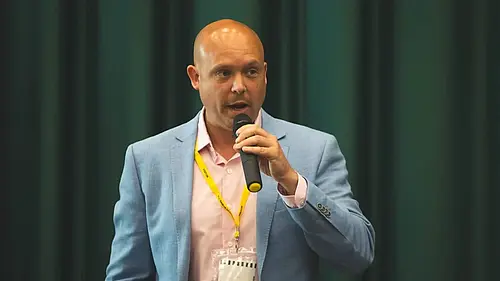
Cameron Thomas speaks on Russian sanctions
In your view, what is the main weakness in UK and wider Western sanctions against Russia?
Three factors clearly weaken the effectiveness of Western sanctions against Russia.
International reliance on fossil fuels. Trump’s historic miscalculation in Iran has seen oil prices escalate as availability diminishes. This has made Russian oil and gas both more desirable and more expensive. By necessity, or perhaps desire, Trump has withdrawn sanctions on Russian oil and gas, which will support Russia’s war effort.
Third-party states. Most US and European companies are now banned from trading in and/or with Russia. Despite this, Russia has a number of allied states acting as proxies which are not under Western sanctions. These countries could, and it seems likely are, passing on Western products to Russia.
Willingness to enforce sanctions. There have been some high-profile examples of Russian shadow fleet vessels being confiscated through military intervention, yet there have also been examples, including one recently in the English Channel, where vessels have not been confiscated.
Do you agree that one of the central problems is the gap between identified violations and the actual prosecution of those responsible?
I do, as I have covered in the preceding answer. As with any civil or criminal law, sanctions are only a deterrent to malign activity if they are enforceable.
International sanctions are only legitimate if they threaten a significant economic or diplomatic penalty, and in most, perhaps every, case that means cooperation between several states.
Organisations such as the EU, G7 and UN are crucial to holding bad actors to account, particularly those at the head of large and powerful states. That is why Putin, as well as Trump, continues to undermine international partnerships.
What should be changed to ensure that sanctions violations lead to real investigations, prosecutions and penalties across the full chain of actors involved?
Enforceable sanctions against states which undermine efforts to curtail malign activity. Again, the EU and UN are crucial to such enforcement.
Due consideration should be given to states which are beholden to Russian oil and gas. What we don’t want to do is put states like Germany under such economic pressure that their population turns against international cooperation. In cases such as this, a force such as the EU can assist economically with a timely transition.
Should liability extend to the full network facilitating sanctions evasion, including banks, traders, insurers, logistics operators, intermediaries and third-country entities that knew or should have known the nature of the transaction?
Yes, but a reasonable period of transition for those intrinsically linked to the malign state is imperative to maintain good relationships between collaborating states.
Would stronger coordination between the UK, the EU and other allied jurisdictions help make sanctions enforcement more effective in practice?
In theory, yes. In practice, it would depend on the collective appetite to accept short-term hardship for long-term benefit. It would further depend on appetite for collaborative enforcement.
Putin is right to view the EU as a threat because, once again, with its collective economic and diplomatic might, it is absolutely crucial. It is a tragedy both for the UK and for the EU that the UK is no longer a member.